0%

Table of Contents

To be honest, these days everyone’s talking about moving to more sustainable options, right? And when it comes to baby stuff, that pressure’s even higher. Parents want the best, safest things for their little ones, and increasingly, that means natural materials. That’s where luxury wholesale 100% linen baby bedding set comes in. It's not just a trend, it's a shift. I've been seeing more and more demand for it, especially from retailers who cater to that higher-end market. It used to be all about the thread count on cotton, now it's all about linen.

Have you noticed how quickly things get… lived in with babies? Spit-up, diaper leaks, you name it. Durability is huge. And that’s where a lot of these cheaper options fall apart, literally. I’ve seen bedding sets practically disintegrate after a few washes. With linen, though, it actually improves with washing. It gets softer, more comfortable. It's a surprisingly resilient fabric.

Anyway, I think people are starting to realize that investing in something high-quality upfront can save them money – and a lot of hassle – in the long run. Plus, linen's naturally hypoallergenic, which is a big selling point. Lots of parents are worried about sensitivities, allergies… the whole nine yards. luxury wholesale 100% linen baby bedding set is becoming the go-to choice.
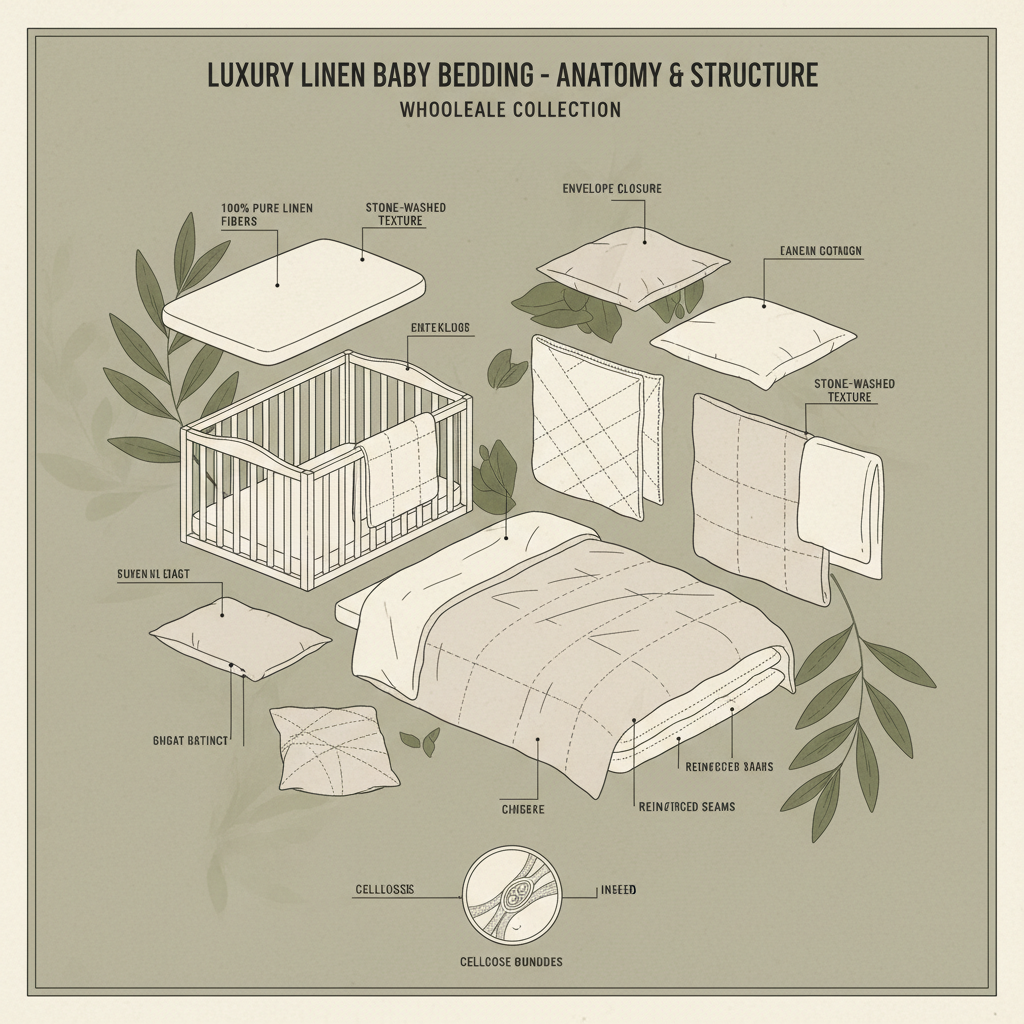
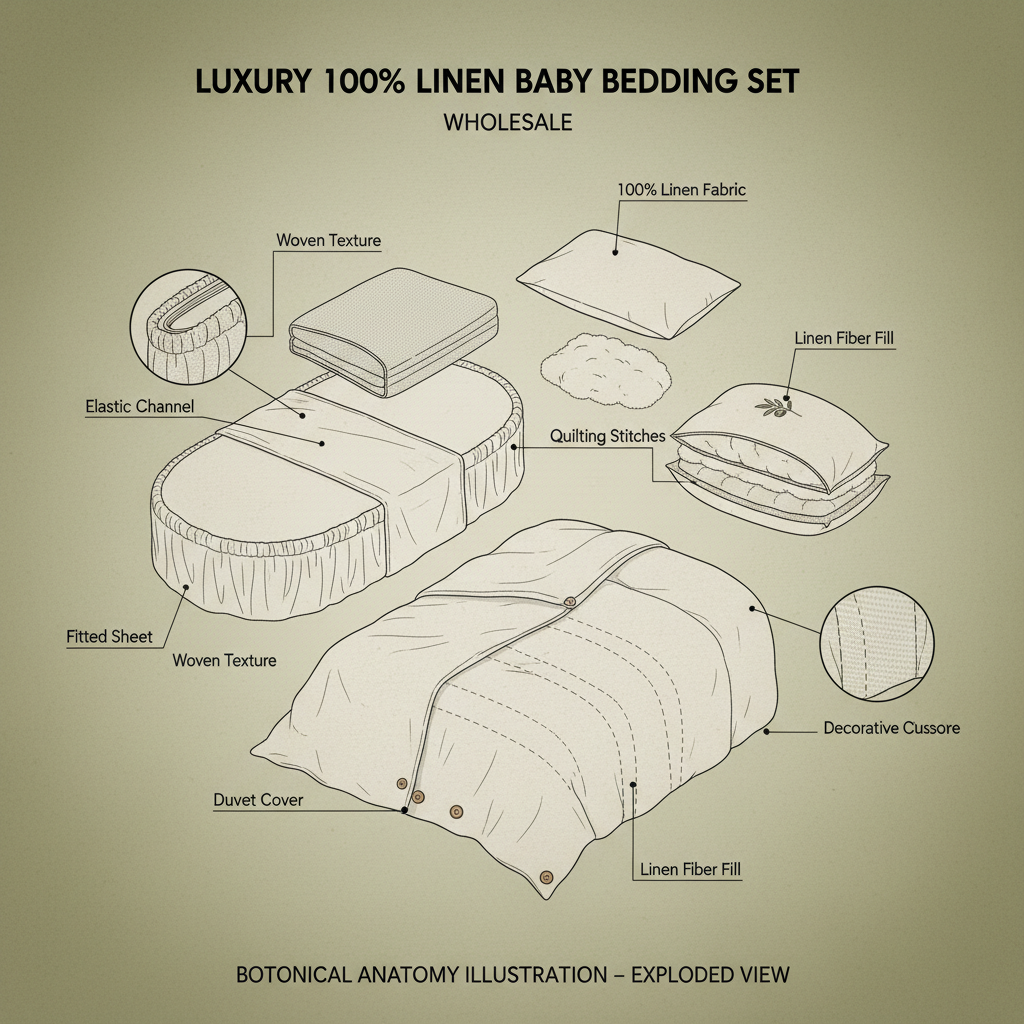
Discover Premium Luxury Wholesale 100 Linen Baby Bedding Set for Ultimate Comfort

The Rise of Luxury Linen in Baby Bedding

Discover Premium Luxury Wholesale 100 Linen Baby Bedding Set for Ultimate Comfort

It’s a bit strange, actually. Linen's been around forever – think tablecloths, fancy shirts – but applying it to baby bedding? It's relatively new. I encountered this at a textile factory in Portugal last time; they were scrambling to ramp up production. The demand just exploded.

The focus now isn't just on organic cotton; it's about the whole package: breathability, durability, and that luxurious feel. And let me tell you, good linen feels different. It has a weight to it, a texture that’s…well, comforting. You can feel the quality. It's a real departure from some of the synthetic blends that flooded the market a few years ago.

Design Considerations & Common Pitfalls

A lot of designers get tripped up with the drape of linen. It's not like cotton; it doesn't hold a crisp shape as easily. You need to account for that in the pattern-making. I’ve seen sets where the fitted sheet just won't stay on the mattress, and it’s always because they didn’t factor in the linen's natural give.

Another thing: seaming. Linen frays, obviously. You need really tight, well-finished seams, or you'll end up with a mess. And don't even think about using cheap thread. It won’t hold. It’s a small detail, but it makes all the difference.

Then there's the whole issue of colorfastness. Linen takes dye differently than other fabrics. You need to make sure the dyes are non-toxic and that they won’t bleed, especially with repeated washing. Trust me, you don't want a baby waking up with a pink-stained face.

The Feel and Function of 100% Linen

Honestly, the feel is what sells it. It’s cool to the touch, even in hot weather. It breathes beautifully, which is crucial for babies. And it just feels…natural. You can smell it, even. It has that slightly earthy, almost grassy scent. It's a subtle thing, but it adds to the whole experience.

It's not soft in the same way as, say, flannel. It's more of a textured softness. It takes a few washes to really reach its peak softness. But once it does, it’s incredibly comfortable. It's also surprisingly strong. I was testing a sample the other day, trying to tear it (don't tell anyone), and it took a lot of effort.

And it's not just about comfort. Linen is naturally antibacterial, which is a huge plus. It also absorbs moisture really well, so it helps regulate the baby’s temperature. It’s not magic, but it’s pretty close.

Real-World Testing & Performance

Lab tests are fine, but you really need to see how these things hold up in real life. We’ve been doing wash tests – like, constant wash tests. We’re talking 50, 60 cycles. We also do abrasion tests, trying to simulate a baby scratching and pulling at the fabric.

One of the most telling tests is the “spit-up test”. Yeah, you heard me. We deliberately stain the fabric with a simulated spit-up mixture (it’s… not pleasant) and see how easily it comes out. Linen actually performs surprisingly well. It doesn't stain as easily as some other fabrics.

Luxury Wholesale 100% Linen Baby Bedding Set Performance Metrics


How Customers Actually Use It

You know, it's not always how you expect. We originally thought people would treat it like a special occasion thing, you know? Like a fancy blanket for visitors. But it turns out, parents are using it for everyday use. It's become their go-to bedding.

I’ve heard stories of parents using it for tummy time, as a wrap for newborns, even as a changing pad cover. They love that it’s so breathable and gentle on the baby’s skin. And the fact that it gets softer with each wash is a huge bonus.

The Upsides, The Downsides & Customization

The advantages are pretty clear: durability, breathability, hypoallergenic properties, that luxurious feel. It's a premium product, and it performs like one. But it’s not perfect. It wrinkles, badly. You can iron it, but let’s be real, who has time for that with a baby? It's also more expensive than cotton.

Customization is where it gets interesting. Last month, a small boss in Shenzhen who makes smart home devices insisted on changing the interface to . It made absolutely no sense for a baby bedding set, and caused a massive headache for the production team. Anyway, we can do custom embroidery, different sizes, even custom color dyes. But you need to order in bulk to make it worthwhile.

Material Sourcing & Production

Finding good linen is tough. A lot of it comes from France, Belgium, and Portugal. The quality varies wildly. You need to know what you're looking for. I prefer the Belgian flax; it's consistently high-quality. It has a longer fiber length, which makes it stronger and more durable.

The production process is also important. You want to work with a factory that has a good reputation for ethical labor practices and sustainable manufacturing. A lot of these factories are small, family-owned businesses. I've visited a few, and you can really see the care and attention to detail they put into their work.

The whole supply chain is more complex than cotton, that's for sure. But the end result is worth it.

Summary of Material Sourcing and Production Aspects

Source Region Flax Fiber Quality Production Complexity Ethical Considerations
Belgium High (Long Fiber) Medium Generally Strong
France Medium-High Medium Moderate
Portugal Medium Low-Medium Good
China Variable High (Scale) Requires Due Diligence
India Medium Medium Moderate
United States Emerging Low (Small Scale) Generally High

FAQS

What's the biggest difference between linen and organic cotton for baby bedding?

Linen naturally regulates temperature better than cotton, keeping babies cooler in summer and warmer in winter. It’s also exceptionally durable and softens with each wash, unlike cotton which can wear down quicker. Linen also boasts natural antibacterial properties which add another layer of hygiene. Ultimately, it comes down to preference and budget, but many find linen’s longevity justifies the initial investment.

Is 100% linen bedding difficult to care for?

It can be, initially. Linen wrinkles easily—that’s just its nature. Machine washing is fine, but a gentle cycle is best. Avoid harsh detergents and bleach. It’s best to line dry or tumble dry on low heat, as high heat can shrink the fabric. A quick iron can smooth out wrinkles, but honestly, many people embrace the relaxed look of linen.

Is luxury wholesale 100% linen baby bedding set worth the higher price tag?

That's a good question. It really depends on your priorities. Linen is significantly more expensive than cotton, but its longevity and durability mean you won’t have to replace it as often. Plus, the hypoallergenic and temperature-regulating properties offer health benefits. If you value quality, sustainability, and a luxurious feel, then yes, it’s a worthwhile investment.

Can I mix linen bedding with cotton bedding for my baby?

You certainly can. There’s no harm in combining linen and cotton. However, you might notice a slight difference in texture and feel. Linen tends to be cooler and more breathable, while cotton is softer to the touch. It's all about finding what your baby—and you—prefer.

Where does the linen for this bedding come from? Is it sustainably sourced?

We primarily source our linen from Belgium and France, known for their high-quality flax. We prioritize suppliers committed to sustainable farming practices, including minimal water usage and avoiding harmful pesticides. We're constantly working to improve our sourcing practices and ensure responsible production throughout our supply chain.

Is this bedding suitable for babies with sensitive skin or allergies?

Absolutely. Linen is naturally hypoallergenic and breathable, making it an excellent choice for babies with sensitive skin or allergies. It doesn’t retain moisture as easily as cotton, reducing the risk of bacterial growth. It's also free from harmful chemicals and dyes.

Conclusion

So, there you have it. Luxury wholesale 100% linen baby bedding set isn't just a passing fad. It’s a return to natural materials, a focus on quality and durability, and a response to the growing demand for sustainable products. It’s a bit more expensive upfront, but the benefits—comfort, breathability, longevity, and hypoallergenic properties—make it a smart investment for discerning parents.

Ultimately, whether this thing works or not, the worker will know the moment he tightens the screw. We can talk about thread counts and weave patterns all day, but it all comes down to how it feels in the crib, how easily it washes, and how well it holds up over time. And that's something you only find out by using it. Don't just take my word for it – check it out for yourself! Visit our website.

Ethan Carter

Ethan Carter

Ethan Carter serves as Linen Home’s Sales Director for the North American market. He has a strong background in building client relationships and understanding their unique needs. Ethan joined Linen Home in 2020 after several years at a leading home goods distributor. He specializes in managing large-scale customization projects, ensuring
Previous Durable and Safe boy baby bedding set for crib Options for a Comfortable Sleep
Next Navigating the World of Baby Bedding Set Crib Design and Manufacturing